



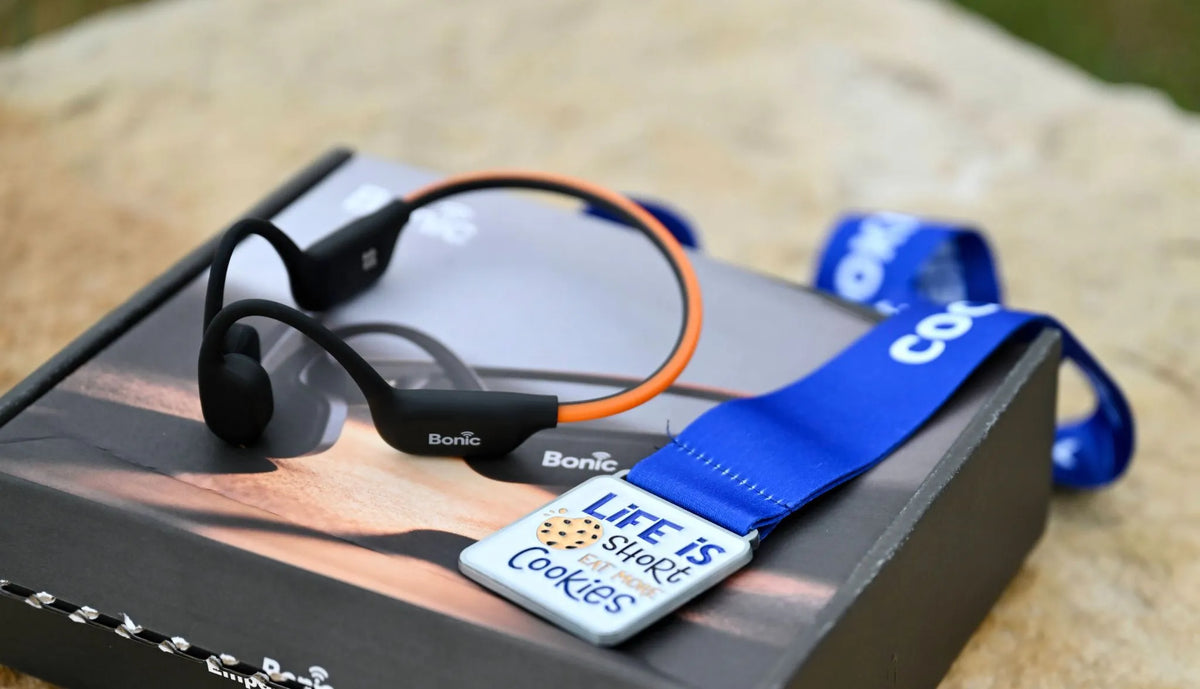
Two pairs of headphones sit side by side on a shelf. Neither of them goes inside your ear. Both are open-ear headphones. So they must be the same thing?
Not quite. The question of bone conduction vs. open-ear headphones is a frequent topic of confusion among shoppers, mostly because the terms overlap. Bone conduction sends sound through the bones of your face. Open-ear air conduction headphones use small speakers that sit near your ear and send sound through the air, like any other speaker would.
Both help keep your ears free. Beyond that, they feel different, sound different, and suit different habits.
First, "Open-Ear" Isn't One Technology
“Open-ear” means where the headphones sit, not how they make sound. It means nothing obstructs your ear canal.
In terms of headphones, you'll find two styles: Air conduction open-ear headphones aim small speakers at your ear canal from outside, but the sound travels through the air. Your ears work as they normally do. Bone conduction headphones rest on your cheekbones, or the bone just in front of your ear, and send vibrations through the bone to your inner ear.
Also, bone conduction is considered one type of open-ear design. When people search “open ear vs bone conduction,” they’re almost always comparing bone conduction to air conduction open-ear models. That’s the comparison here.
One correction to a popular claim. You will often read that bone conduction “bypasses the eardrum entirely.” Researchers say it is more complicated, with vibrations passing through more than one route to the inner ear. For buying purposes, the point is simple: sound is delivered through contact with your head rather than relying only on air.
Bone Conduction vs Open-Ear Headphones at a Glance
|
Factor |
Bone conduction |
Open-ear air conduction |
|
How sound gets to you |
Vibrations through bone |
Small speakers send sound through the air |
|
Ear canal |
Stays open |
Stays open |
|
Sound character |
Bass tends to be lighter |
Tends to be fuller, closer to regular headphones |
|
Awareness of surroundings |
High |
High |
|
Physical feel |
Some people feel a buzz at high volumes |
No vibration felt |
|
Secure fit for sport |
Often very secure with a wraparound band |
Depends on the hook or clip design |
|
Sound leakage |
Possible |
Possible |
|
Noise isolation |
Very little |
Very little |
|
Water resistance |
Depends on the model's rating |
Depends on the model's rating |
The answer is "depends" in a lot of these rows, and that is the honest answer. Fit, bass, and water protection change a lot from one product to the next, so treat the table as a rough guide, not a final verdict.
How Different Do They Actually Sound?

Bone conduction
Vocals and podcasts are clear. Music is fine, but the bass is lighter than sealed in-ear headphones. According to Bonic's FAQ, mids and vocals are clear, and the bass is lighter. Some users may feel a vibration on their cheekbones when the volume is high. If this occurs, turn the volume down or adjust the headphones.
Open-ear air conduction
These headphones are similar to regular headphones but have more body, so the sound feels fuller. The only problem is that there is no earplug to protect your ears from noise. A passing bus or a loud gym can drown out the low frequencies. Some people turn up the volume to compensate.
For just a light podcast on a slow run in the morning, most headphones are fine. For a deep bass-loaded playlist at the loud gym, it's a whole other kettle of fish. If that's your style, open-ear air conduction isn't as jarring.
Which One Keeps You More Aware of What's Around You?
Both leave the ear canal open, so they let sound outside in. Neither wins this round on its own. But how loud you listen is what matters. If you crank either up too high, you may miss some of the sounds around you. If you turn the volume down, you'll usually hear tires, a bike bell, or someone calling your name.
Open-ear listening won't always be safer. It may make surrounding noises easier to pick up than sealed earbuds. Your own attention and the traffic around you decide the rest.
If you ride a bike or run on U.S. roads, greenways, or shared trails, hearing a car or an "on your left" call is probably worth more than squeezing out every last bit of bass.
Comfort Isn't Only About an Open Ear Canal
A clear canal helps, but it doesn't mean the headphones are comfortable.
Bone conduction devices have small pads on your cheekbones. Some people don't notice them, and others feel some pressure or buzz as the volume rises. Open-ear air conduction devices hang on the outside of the ear with a hook or clip that can rub if the shape isn't right for you. A neckband style spreads the weight differently than a single clip-on device.
But even a five-minute try-on will tell you very little. It may feel fine at first, but pressure or rubbing may become apparent during a longer run or work session.
Can You Wear Them With Glasses?
Usually, but consider this: the arms of your glasses run along the same spot as the hook or band. Thick frames or cycling sunglasses can crowd it. Bonic advises wearing thick-framed sunglasses and cycling-specific eyewear before an extended ride. Hats, helmet straps, and ear warmers all share the patch behind and above your ear, so they compete for space too.
Which One Stays Put Better During Workouts?

Technology doesn't decide this. Design does.
A snug wraparound band tends to stay put even during sprints, burpees, and trail running. This is one reason bone conduction headphones often use this shape. Open-ear clips can hold well too, but they depend more on the shape of your ears, and some can bounce in high-impact situations.
Sweat matters. A band that slips when wet isn't doing its job, regardless of how it makes sound.
If running is more your thing, Bonic's piece on open-ear headphones for runners breaks down the reasons to get open-ear headphones. The big question here is: which design will work well for you?
What About Cycling and Helmets?
Cyclists suffer the same problems as runners, with a few added ones. Helmet straps cross the same area as headphone bands. Wind noise gets in the way of quiet audio. And riding at dusk, being seen matters as much as hearing.
Check the following items: Does the band clear your helmet straps? Does it rest comfortably next to your sunglasses? Can you find the controls with gloves on? A pair that looks great on paper may not pass the helmet test.
If you ride or run in low light, a built-in light can help, and Bonic's piece on LED running gear addresses whether LED lights are worth the expense. Headphones for cyclists are also subject to local rules, so do your research where you ride.
Which One Leaks More Sound?
As there is no seal around your ear, some sound leaks out either way. Air conduction models push sound through the air towards your ear, and some of it spreads. Bone conduction units may leak a small buzz or hiss at higher volumes, depending on the design and how snugly they sit against your head.
Your surroundings matter more than the type you pick. No one will care if you play loud music on the trail. In a quiet office, on the train or in a library, they probably will. At a moderate volume, most people are fine.
If you value privacy in public, test out your pair in a shared space before the return window closes.
Sweat, Rain and Swimming: Check the Rating, Not the Technology
Bone conduction does not necessarily mean waterproof, and open-ear does not necessarily mean fragile. The thing to look for is the IP rating of the product.
IPX4 handles splashes and sweat. IPX7 is fine for a brief submersion. IPX8 goes further, though the exact depth and time depend on what the manufacturer tested. Don't assume. Read the spec sheet.
With swimming, there is a catch. Bluetooth signals don't move well in water, so a headphone that plays music from your phone won't work in the pool unless you also have it stored in memory on the headphones.
Swimming deserves a separate guide. "Fine in the rain" and "built for the pool" are not the same thing. For now, read the rating, then read what the maker says the product was tested for.
Which Is Better for Everyday Listening and Work?

Most guides on this topic focus on workouts. Quite a few people wear open-ear headphones at their desk.
If you make calls, listen to podcasts, and need background music to play while you work, use either one. The open canal is nice because you can hear your coworker or the doorbell. If your day is mostly music, open-ear air conduction may be a little fuller, and you may enjoy it more sitting at your desk. If your day is a mix of commutes, running errands, working out, and telephone calls, a pair of bone conduction headphones with a secure band may be the best choice.
Again, it depends on the model.
Which Should You Choose?
Skip the spec sheet for a moment and picture the person who wears them.
The road runner cares about stability, awareness, and weather. More important than deep bass is a snug band and good water protection. Music-first listeners like fuller sound and love the acoustics of open-ear systems but don't want plugged ears.
The cyclist needs awareness and has to sort out helmet and sunglasses compatibility first. Sound quality comes second. The multisport athlete, or swimmer, needs to first check for water ratings and onboard storage.
No one design is the best. And if you're torn between two different designs, ask yourself: Would you prefer thinner bass or a less snug fit? Your answer will usually point you in the right direction.
Where Bonic Cycle and Bonic Fusion Fit
If you've been searching for the Best Bone Conduction Headphones in the USA, this is the line-up for you. Two models, one design. Both feature open-ear bone conduction, a memory metal frame inside a silicone cover, IPX8 waterproofing, and 32GB of built-in storage, so you can leave your phone at home. Battery life is around 7 to 9 hours per charge.
The Bonic Fusion is the lighter option at 27g and comes in four city-themed colors. There is no light on this model, so it is suitable for daytime running, the gym, lit streets, and everyday use.
Bonic Cycle weighs 31g and has a rear LED with steady, flash, and breathe modes. It is the best option for pre-dawn runs, night rides, or low-light conditions.
Don't know which to choose? Check out the Bonic Cycle vs Fusion comparison for specs and order with a 90-day risk-free trial.
Final Verdict
Those who use headphones for outdoor training or who just want headphones that won't slip and fall in the rain might like our picks for bone conduction. If you prefer fuller sound at work or on the walk, open-ear air conduction may be a better fit.
In the end, neither choice is better. You pick the compromise that bugs you least. If you live outside and can live with thinner bass, shop Bonic bone conduction headphones to find the pair that works best for you.
FAQs
1. Are bone conduction headphones also open-ear headphones?
Yes, open-ear headphones leave your ear canal uncovered, and bone conduction headphones are one type. When you compare the two, you usually mean bone conduction open-ear headphones versus air conduction open-ear headphones that have small speakers aimed at your ears.
2. Is bone conduction better than open-ear air conduction?
Neither wins: generally, the one with more bone conduction produces a snugger sports fit with a thinner sound, while the one with more air conduction sounds fuller, but fit depends on the hook or clip you choose. Pick depending on how you plan on using them most.
3. Which sounds better?
Air conduction models sound closer to regular headphones in terms of bass and quality, while bone conduction has a higher midrange and is softer on the low end. There are many different models to choose from, so be sure to read reviews and check for a decent return policy.
4. Do bone conduction headphones leak sound?
A lot of them can. They can, mostly at higher volumes. So can air conduction models that do not seal your ear. Keep the volume low in quiet places such as offices or trains, and test your headphones out in a quiet place before you buy.
5. What is better for running?
Either can work. For runners, stability, weather protection, and hearing traffic are important factors. Some people like a snug band, while others prefer a hook or clip. Check the fit and make sure the store has a good return policy.
Share:
Is It Safe to Run at Night? What the Research Actually Says
Can You Swim With Bone Conduction Headphones? Bluetooth, MP3 & IPX8 Explained